Microplastics

Detection

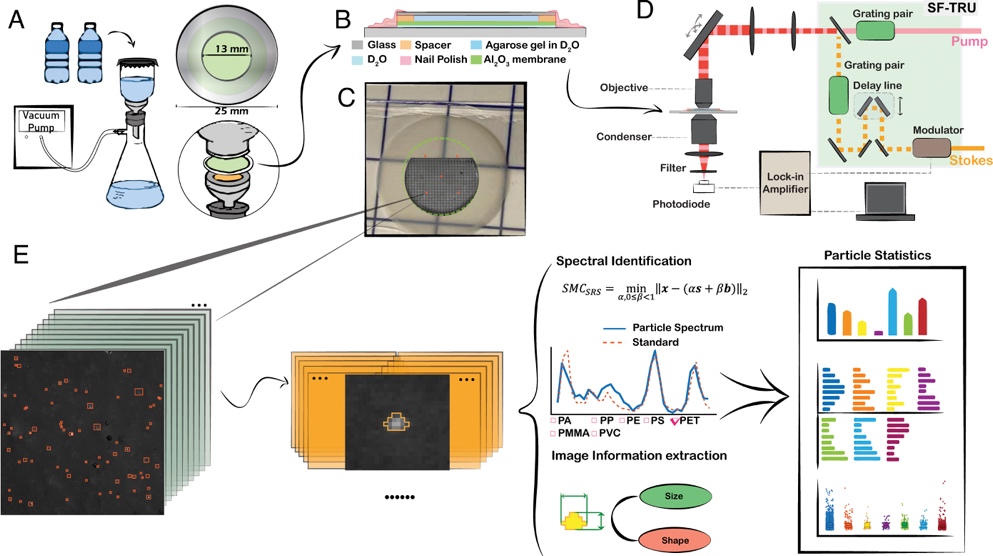
Workflow for collecting, imaging, identifying, and quantifying micro- and nanoplastics in bottled water

Micro- and nanoplastics are widespread environmental contaminants, yet their detection and chemical identification remain challenging, particularly at the nanoscale. We develop stimulated Raman scattering (SRS) microscopy and data-driven spectral analysis for rapid, label-free chemical imaging of individual plastic particles. Using this platform, we identified and quantified micro- and nanoplastics in bottled water at the single-particle level. We are now extending this platform to increasingly complex environmental and biological samples.

  • N. Qian, X. Gao, X. Lang, H. Deng, T. M. Bratu, Q. Chen, P. Stapleton, B. Yan and W. Min. “Rapid single-particle chemical imaging of nanoplastics by SRS microscopy,” Proc. Natl. Acad. Sci. U.S.A. 121, e2300582121 (2024).
Chemistry

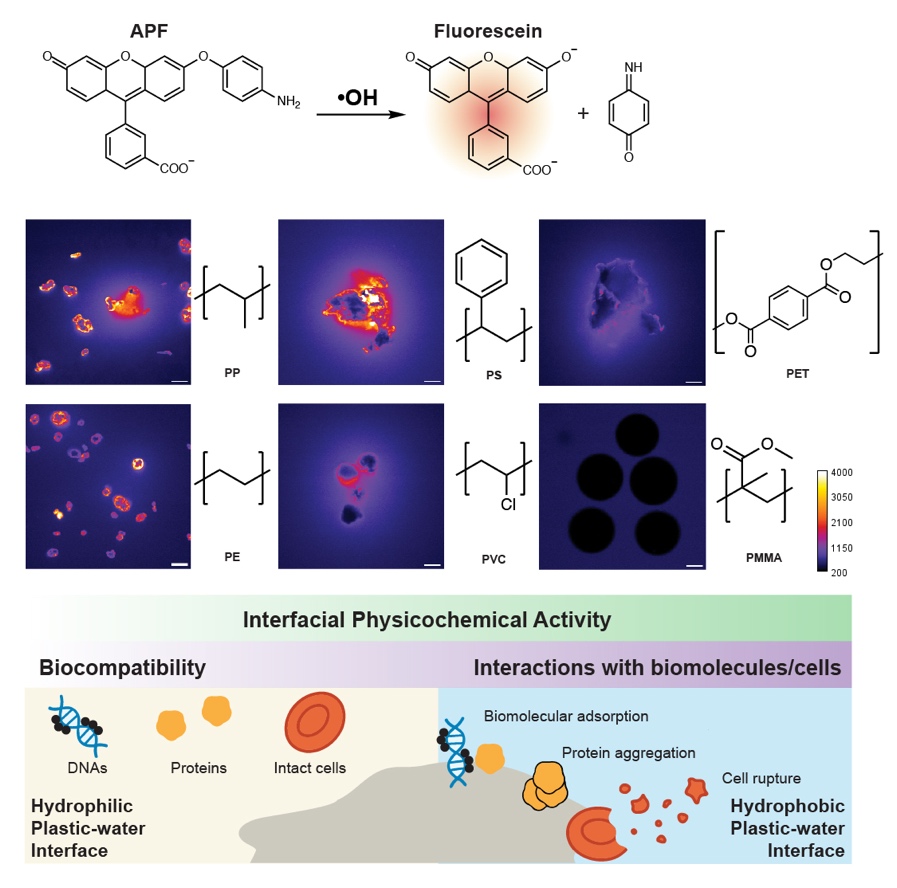
Hydroxyl-radical activity at several plastic-water interfaces and its biological effects

Microplastics are often considered chemically inert, yet their interfaces with water can exhibit unexpected physicochemical activity. We investigate how hydrophobic plastic-water interfaces promote the spontaneous generation of reactive oxygen species that increases with interfacial hydrophobicity and strongly correlates with interfacial electrostatics. These interfacial properties and the resulting oxidative chemistry have direct implications for protein and DNA adsorption, protein aggregation, and even cellular damage. These findings identify a possibly overlooked mechanism for the detrimental effects of microplastics on health and the environment.